
Notebook · Shadow work
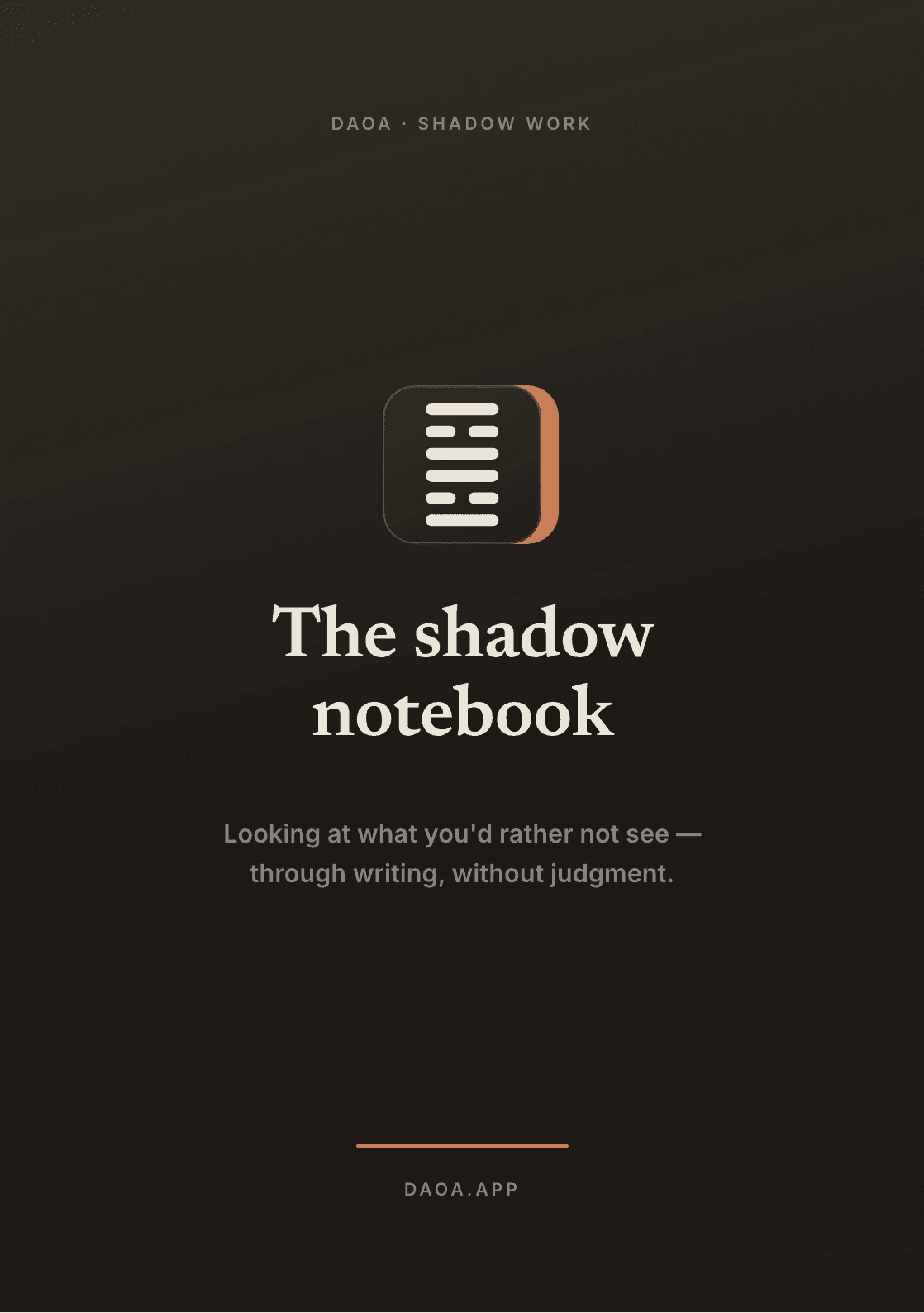
The shadow notebook
A guided notebook for shadow work — looking at what you'd rather not see of yourself, through writing, without judgment. Five exercises, twelve Yi Jing figures with their prompts, and the guardrails missing everywhere else. Free, as a PDF, no esotericism.
What's inside
Three pages to set the practice: the shadow plainly (where the concept comes from, what it names), the method (ten minutes, write fast, reread slowly), and the guardrails — neither therapy nor divination.
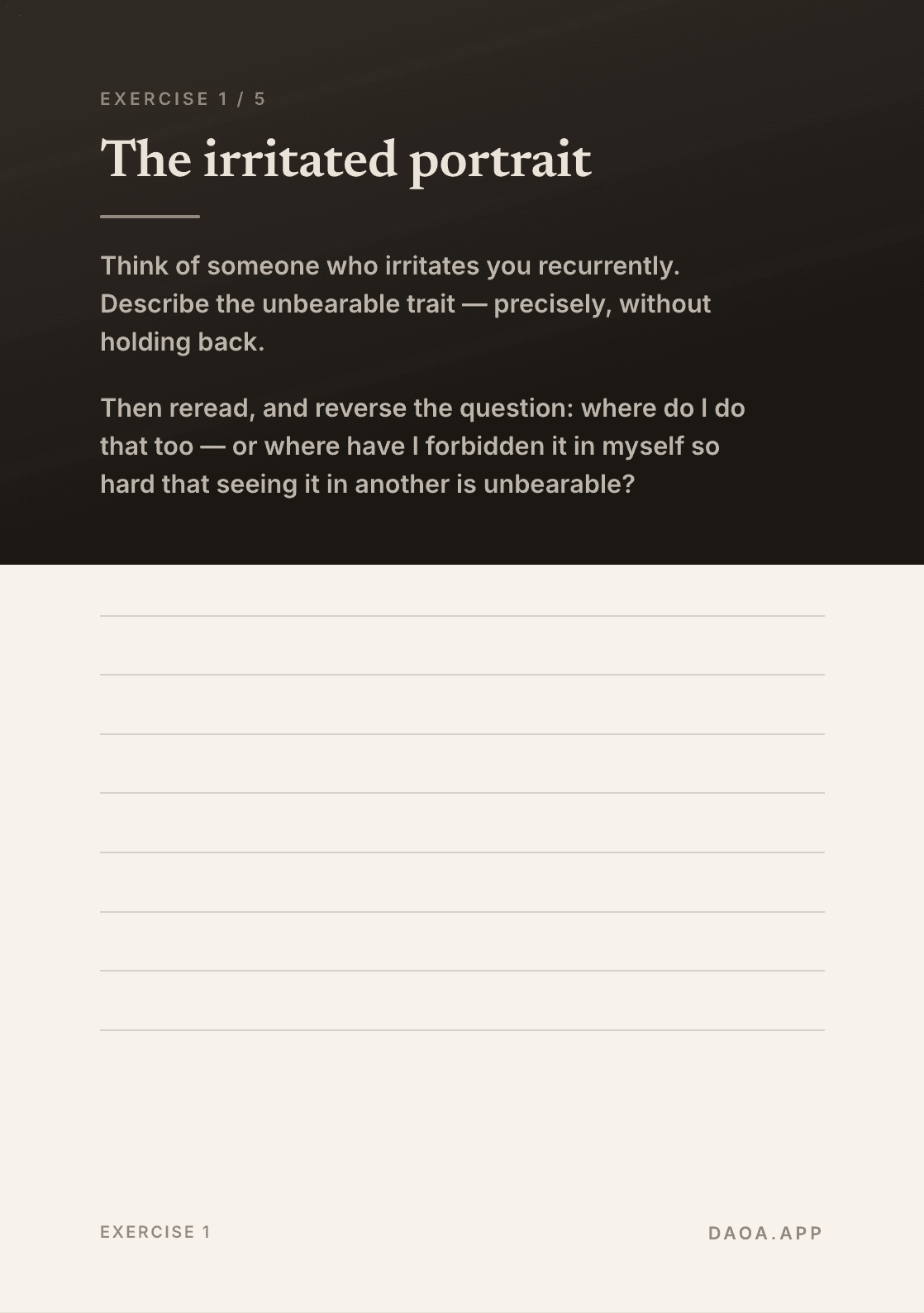
Then five proven writing exercises — the irritated portrait, the outsized reaction, the impossible compliment, the dialogue with the figure, the “I am not” inventory — each with room to write.
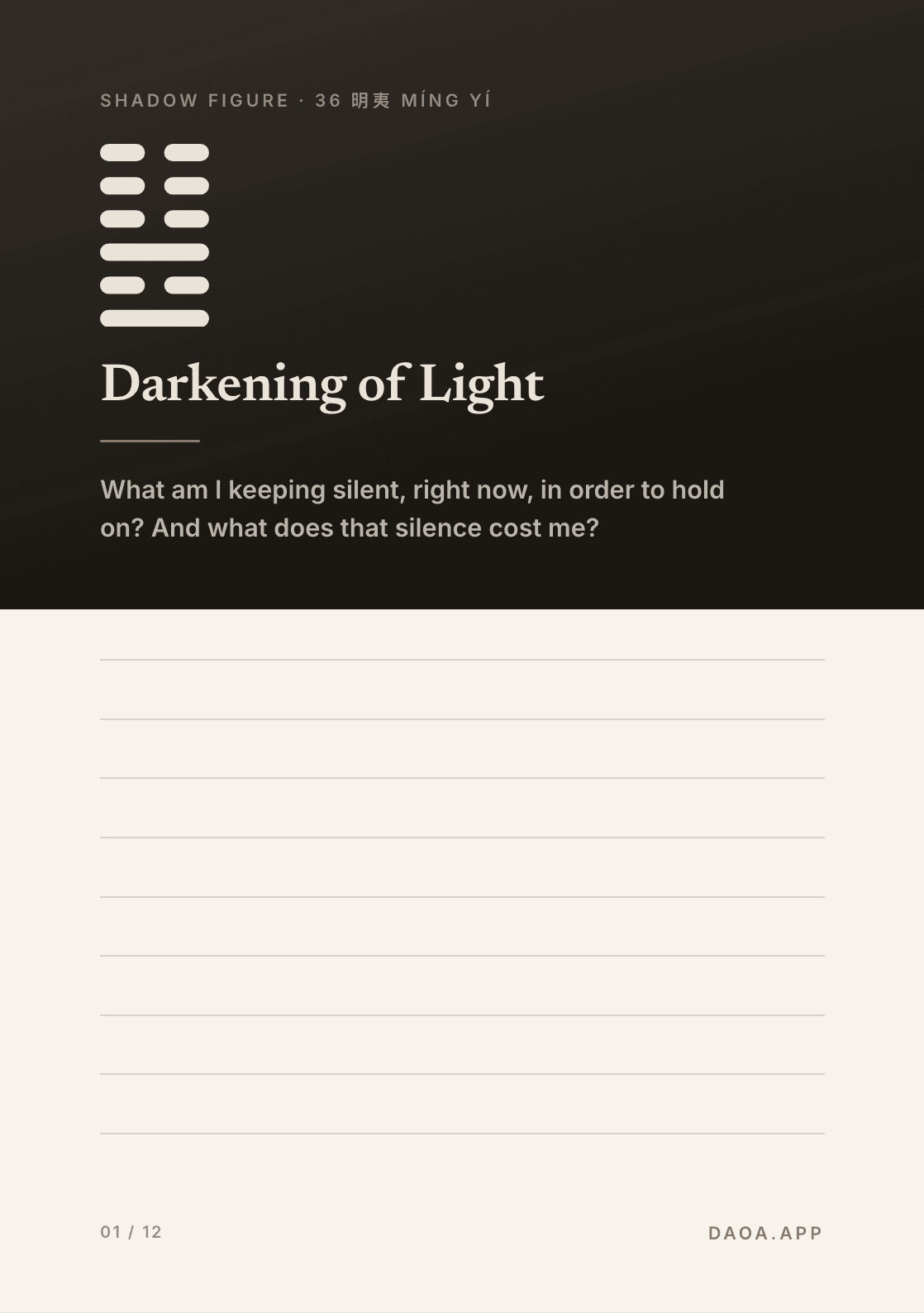
And twelve shadow figures of the I Ching — Darkening of the Light, the Abysmal, Encounter… — each with a dedicated prompt that opens sideways what a frontal question corners.
A sober voice, in a field that rarely is
Shadow work content usually swings between the clinical and the esoteric. This notebook holds a third voice: calm, concrete, grounded in a real symbolic system — in the lineage of Jung, who coined the shadow concept and introduced the I Ching to the West.
Nothing to believe, nothing predicted, nothing to heal: an image to look at yourself, and room to write.
Get the shadow notebook
Free PDF, to download right away. Your email lets us send you the next notebooks.
To start online:
Or continue each day in the app:
Frequently asked questions
- Is the notebook really free?
- Yes, entirely. You leave your email and the PDF downloads right away.
- What format?
- A 22-page A5 PDF, ready to print — or to keep on your screen.
- Do I need to know Jung or the I Ching?
- No. The notebook opens on three pages that set everything out — the concept, the method, the guardrails — in plain language.
- Is it a therapeutic tool?
- No, and it says so clearly: it's a writing notebook. If what you meet overflows it, it honestly points you toward human support.